How to Choose a Home EV Charger: A Tustin Buyer's Guide
Choosing a home EV charger in Tustin comes down to five decisions: how many amps the unit draws, whether it plugs in or gets hardwired, how far its cable actually reaches, whether it carries real safety certification, and whether you need the app-connected features at all. Skip any one of them and you either end up with a charger your panel cannot support or a unit that cannot reach your car. This guide walks through each decision in order, so a Tustin homeowner shopping for a Level 2 home EV charger can compare units on the specs that matter rather than on marketing claims.
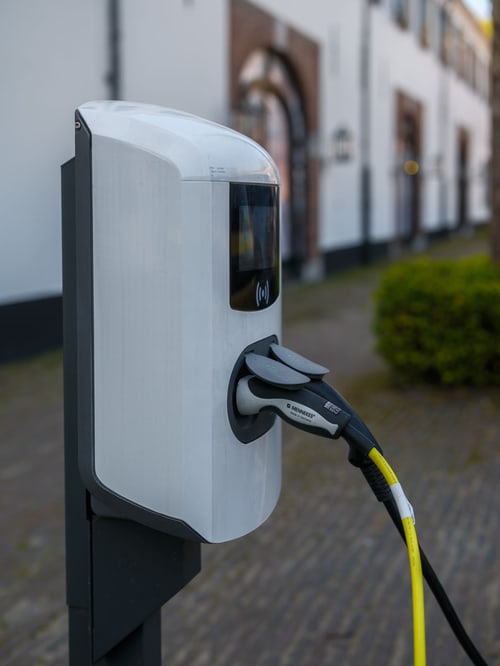
How to Choose the Right Amperage: 32-Amp vs 48-Amp
The charger's amperage rating decides what breaker and wire size the installation needs, so it has to be picked before anything else. A 32-amp charger typically runs on a 40-amp circuit, while a 48-amp unit needs a 60-amp circuit and heavier conductors end to end. According to the Alternative Fuels Data Center, Level 2 equipment runs on a 240-volt circuit, and a licensed electrician should evaluate whether the home's existing service has enough capacity before any circuit is added. Homes on an older 100-amp or 125-amp panel in central Orange County often have less headroom than a newer 200-amp service, so the amperage that fits comfortably on one property can force a panel upgrade on another. Buying the highest-amperage charger available is not automatically the right move; a 32-amp unit that matches the home's existing capacity is often the cheaper, faster installation, and it still adds meaningful range overnight for most daily driving.
Plug-In vs Hardwired: Which Setup Fits Your Garage
A plug-in charger connects to a NEMA 14-50 outlet and can be unplugged, moved, or swapped if the unit fails, which makes it a practical choice for a garage that might see a different EV brand down the road. A hardwired unit wires directly into the circuit with no receptacle in between, which is the setup used in most hardwired EV charger installations, including most 48-amp units. A certified electrical contractor should assess the home and handle the circuit work either way, since both approaches still route through the panel and still fall under the same permitting rules. If flexibility matters more than squeezing out the last few amps, a plug-in setup is the lower-friction choice; if maximum charging speed matters more, hardwiring removes the connector as a point of failure.
Cable Length: Matching Reach to Where You Actually Park
The charger's mounting point and the vehicle's charging port location together decide whether the cable actually reaches without stretching across a walkway or forcing an awkward parking position every night. Charging port placement varies by manufacturer, some sit at the front driver's side, others at the rear, so the unit should be mounted based on where the specific vehicle's port sits, not on a generic garage corner. Tesla notes that its Wall Connector's lightweight design allows for indoor or outdoor mounting, which gives an installer more flexibility to place the unit close to the parking spot rather than defaulting to the nearest electrical panel wall. A short walk-through with the installer before mounting, car parked in its usual spot, catches a mismatch before it is wired in rather than after.
Safety Certification: Why NRTL Listing Matters
A home charger is a 240-volt device that sits outdoors or in a garage for years, so third-party safety testing is not optional. ENERGY STAR states that all of its certified EV chargers are tested for safety by a nationally recognized testing laboratory, commonly shown on the unit as a UL or ETL mark. That listing confirms the charger has been evaluated for things like ground-fault protection, overheating, and weatherproofing under an independent standard, rather than taking the manufacturer's own claims at face value. A charger without a visible NRTL mark is a red flag regardless of price or features, and it is also something a Tustin permit inspector will check before signing off on the installation.
Smart and Networked Features: What They Actually Do
A networked or "smart" charger connects to Wi-Fi and an app, and ENERGY STAR describes this class of product as allowing for remote power monitoring and control of the charging state of the connected vehicle. In practice that means scheduling charging for overnight off-peak hours, checking status from a phone, and in some cases sharing usage data with the utility. ENERGY STAR also notes that certified chargers use roughly 40 percent less energy in standby mode than non-certified units, which matters because a charger sits idle for the large majority of the time it is plugged in. Smart features are genuinely useful for a household on a time-of-use rate plan, but they add cost and a Wi-Fi dependency; a basic non-networked charger with NRTL certification still charges a car safely and reliably without either.
Choosing Between a Tesla Wall Connector and a Universal Charger
Tesla's Wall Connector delivers up to 11.5 kW at a 48-amp output, and its magnetic connector and cable management are built specifically around Tesla Wall Connector installations, with an adapter available for other EVs. A universal Level 2 EV charger installation uses the standard J1772 connector that any non-Tesla EV can plug into directly, and it is the better choice for a household that owns, or expects to own, more than one EV brand. Neither option is objectively better; the decision comes down to which vehicles will actually use the charger over its working life, since replacing a Tesla-specific unit later because a second car does not fit is an avoidable expense.
Permits, SCE Rebates, and Professional Installation in Tustin
Every one of these decisions still has to pass through a permit, and skipping that step is the most common way a home charger installation goes wrong. The Alternative Fuels Data Center notes that charging equipment installations must comply with local and state codes, and in many areas a site installation plan has to be submitted to the local permitting authority before work starts, which for a Tustin address means the City of Tustin's building division. Southern California Edison, the utility serving Tustin and the rest of central Orange County, runs a Charge Ready Home program that offers up to $4,200 in rebates toward installing a Level 2 EV charger, which can offset a meaningful share of the amperage, wiring, and hardwiring decisions covered above. Pulling the permit and checking rebate eligibility before the charger is mounted, rather than after, avoids paying twice for the same work.
Quick Checklist Before You Buy
- Confirm your panel's main breaker rating and available capacity before selecting an amperage.
- Decide plug-in (NEMA 14-50) vs hardwired based on flexibility versus maximum output.
- Walk the garage with your car parked in its usual spot to confirm cable reach.
- Look for a visible UL or ETL (NRTL) safety listing on the unit.
- Check whether SCE's Charge Ready Home rebate applies before you buy.
Southern California Edison serves Tustin and the surrounding central Orange County area, and its Charge Ready Home rebate is tied to the installation, not to a specific charger brand, so it is worth confirming eligibility before deciding between a plug-in and a hardwired unit.
Frequently Asked Questions
Do I need a 48-amp charger, or is 32 amps enough?
Most daily commutes are covered by a 32-amp charger overnight, and it usually needs a smaller, less expensive circuit. A 48-amp unit makes sense mainly for larger battery packs or a household that needs a full charge in the shortest possible window.
Is a hardwired charger safer than a plug-in unit?
Both are safe when installed and permitted correctly. A hardwired unit removes the plug connection as a wear point, while a plug-in unit on a dedicated NEMA 14-50 outlet is easier to replace or relocate later.
Does the Tesla Wall Connector work with non-Tesla EVs?
Yes, with a J1772 adapter, though it is built around Tesla's own connector and cable design. A household with mixed EV brands is usually better served by a universal Level 2 charger instead.
Do smart charging features actually save money?
They can, mainly by scheduling charging during off-peak utility hours, and ENERGY STAR-certified networked units also use less standby energy than non-certified ones. The savings depend on your utility rate plan, so they matter more on a time-of-use schedule than a flat rate.
Do I need a permit to install a home EV charger in Tustin?
Yes. Charging equipment installations must meet local and state codes, and Tustin's building division reviews the installation plan before work begins, which is also when SCE rebate eligibility is typically confirmed.
Not Sure Which Charger Fits Your Panel?
We check your amperage, circuit, and mounting options before recommending a unit, so the charger you buy is one your home can actually support.