Can You Install an EV Charger in a Condo or Apartment in Tustin?
If you rent an apartment or own a condo in Tustin, the question is rarely whether you want to charge at home and almost always whether you are allowed to. The good news is that California law leans hard in your favor, and most multi-family residents have more options than they expect. What actually decides the path is not the building type but where you park and who controls that space. This guide covers your legal right to charge, how a deeded space differs from shared parking, when a simple Level 1 outlet is enough, and how building-wide Level 2 charging gets approved and installed.
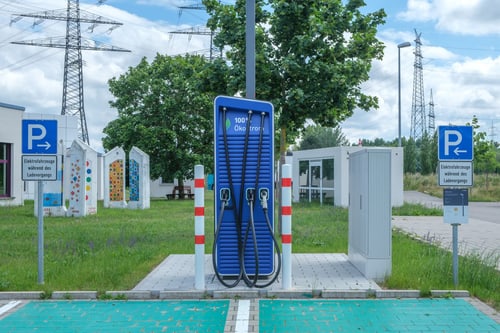
The Short Answer: Usually Yes, With Some Steps
Yes, you can almost always arrange to charge an EV where you live in Tustin, whether you rent or own your unit. California gives renters and condo owners a legal right to install charging at their own parking space, and even without a dedicated installation, many residents can charge on an existing outlet. The real variable is your parking situation: a deeded or assigned space makes a private charger straightforward, while open or shared parking usually points toward a building-wide solution or a nearby shared outlet. None of these is a dead end; they just lead to different installs, and knowing which one applies to you is the first step.
California's Right-to-Charge Law Is on Your Side
California's right-to-charge laws limit how much a landlord or HOA can stand in your way. For renters, state law gives tenants the right to install a charging station at their designated parking space, provided they cover the cost and meet reasonable conditions such as insurance and a licensed installer. For condo and townhome owners, California Civil Code section 4745 bars a homeowners association from unreasonably prohibiting or restricting the installation of an EV charger in an owner's deeded or exclusive-use space. In both cases the resident generally pays for the equipment, the installation, and the electricity it uses, and the landlord or HOA can set sensible requirements, but a flat no is usually not allowed. This is why a surprising number of Tustin condo owners near Tustin Legacy and in the older complexes off Newport Avenue are able to add a charger even when the association was initially hesitant.
A Deeded Space Changes Everything
Whether you have exclusive rights to a specific parking spot is the single biggest factor. With a deeded garage, carport, or assigned space, an electrician can usually run a dedicated circuit from a nearby panel or sub-panel to your spot and install a charger that is yours alone, much like a single-family install. Open or first-come parking is harder, because there is no fixed spot to wire and no clean way to meter the power to you, which is where building-wide or shared charging comes in. Before anything else, find out exactly what rights you hold to the space where you park, because that answer decides whether you are looking at a private charger or a shared one.
What If Your Space Is Assigned but Not Deeded?
Assigned parking sits in between. If the building permanently assigns you a specific spot, many landlords and HOAs will still approve a charger there under the right-to-charge process, though the agreement should spell out what happens if spaces are ever reassigned. It is worth clarifying in writing whether your right to the installation follows you or stays with the spot, because that detail affects who pays if the charger ever has to move, and it keeps a future dispute from catching you off guard.
Level 1 Charging Might Be All You Need
Do not overlook the simplest option. The U.S. Department of Energy notes that overnight Level 1 charging works at no added equipment cost provided a power outlet on a dedicated branch circuit is available near the parking location. A standard 120-volt outlet adds roughly 40 miles of range over a typical overnight charge, which comfortably covers the daily driving of most Tustin commuters. If your assigned space happens to sit near an outlet the building will let you use, or one can be added on its own circuit, Level 1 can solve the whole problem without a Level 2 project or a major approval process. For a plug-in hybrid or a second car, it is often more than enough.
Level 2 and Shared Charging for the Whole Building
When a private circuit is not possible or you need faster charging, the solution usually moves to the building level. The Department of Energy points out that charging at multifamily housing requires additional considerations and can look more like public charging than home charging, which in practice means networked Level 2 stations that track and bill each user's energy. These are exactly the setups a property manager or HOA board installs in shared lots, and California offers incentives through programs listed on the state's DriveClean site and Southern California Edison to offset the cost for multi-family properties. If you are an owner or on your HOA board, a multi-family and HOA charging plan is often the most durable answer for a building with several EV drivers, because it serves everyone rather than wiring one space at a time.
How to Get Approval and Get It Installed
The practical path is short and mostly about paperwork. Start by confirming your parking rights, then submit a written request to your landlord or HOA under the right-to-charge process, including your proposed location, the equipment, and proof you will use a licensed electrician and carry the required insurance. Expect reasonable conditions rather than a refusal. From there a licensed electrician assesses the nearest panel capacity, pulls the City of Tustin permit, and installs the charger or the shared station, handling metering so you are billed only for your own power. Doing it by the book protects you, keeps the association comfortable, and makes sure the circuit is inspected and safe. A proper Level 2 EV charger installation in a multi-family setting is as much about the approval and metering as it is about the wiring.
Charging in a Tustin Condo or Apartment: Quick Checklist
- California's right-to-charge laws let renters and condo owners install charging at their own parking space, with reasonable conditions.
- A deeded or assigned space makes a private charger straightforward; open or shared parking points to a building-wide solution.
- Level 1 charging on a nearby dedicated outlet adds about 40 miles overnight and often needs no special approval.
- Shared Level 2 stations with per-user billing are the usual answer for buildings with several EV drivers.
- You generally pay for your own equipment, installation, and electricity, and must use a licensed electrician.
- California and SCE offer incentives that help offset multi-family charging installations.
Under California's right-to-charge rules, you generally pay for your own equipment, installation, and electricity, and the landlord or HOA can require insurance and a licensed installer. Get the agreement and the responsibilities in writing before work starts, so there are no surprises about who owns and maintains the charger.
What Actually Decides Whether You Can Charge Where You Live
The building type matters far less than two things: the rights you hold to your parking space and whether a circuit can reach it. A deeded space plus nearby panel capacity makes a private charger simple; shared parking shifts the answer toward a Level 1 outlet or a building-wide station, and the law keeps a landlord or HOA from simply refusing either way. Sort out your parking rights first, then decide between a private circuit, a Level 1 solution, or a shared system, and the rest of the project follows from there. If you want help reading your situation, the team at Tustin EV Charger can assess the parking and panel, navigate the HOA or landlord approval, and handle the multi-family and HOA charging install from request to inspection.
Renting or in a Condo and Want to Charge at Home?
Tell us about your parking space and your building, and we will tell you whether a private charger, a Level 1 outlet, or a shared station is the right fit, and help you through the approval.