Is Your Home's Electrical Panel Ready for an EV Charger?
Before you can plug in a new EV at home, one question settles most of the project: is your home's electrical panel ready for an EV charger? The charger itself is the easy part. What matters is whether your electrical service has room for a continuous 240-volt load on top of everything already running in the house. In newer Tustin neighborhoods that is often a non-issue, while many older homes near Old Town were wired for a different era. This guide shows you how to read your own panel, what a load calculation actually checks, and how to tell a true upgrade from a problem that smarter wiring can solve.
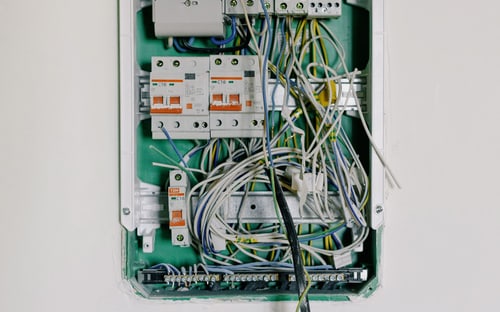
What Does It Mean for a Panel to Be Ready?
A panel is ready for an EV charger when your electrical service has enough spare capacity to carry the charger's continuous draw without crossing safe limits. A home Level 2 charger typically needs a dedicated 240-volt circuit rated between 40 and 60 amps, and that circuit can run at full load for hours at a time. Readiness is not about whether a single outlet exists; it is about headroom in the whole system. The Alternative Fuels Data Center notes that some homes simply have insufficient electrical capacity for Level 2 equipment, and that a qualified electrician can add the circuits needed once that capacity is confirmed. In practice, three things decide readiness: your panel's amperage rating, how much of that capacity your home already uses, and whether there is a free double-pole slot for the new breaker. Answer those three and you know where you stand before you ever shop for a charger.
Start by Reading Your Panel's Amperage Rating
Your panel's amperage rating is the number stamped on the main breaker, and it is the first thing to check. Most homes fall between 100 and 200 amps, with 100-amp service the modern code minimum and 200-amp service the large-capacity tier. Open the panel door and look for a single large breaker, usually at the top or bottom, labeled 100, 125, 150, or 200. In Tustin, that number often tracks the age of the home. Many houses around Old Town Tustin were built with 100-amp or 125-amp service, while newer tracts like Tustin Legacy and Columbus Square were typically wired with 200-amp panels and far more headroom. A 200-amp panel with open slots is usually ready for a charger with little fuss. A full 100-amp panel is where the real evaluation begins, because the question stops being the panel's label and becomes how much of it is already in use.
Why the Charger's Amps Aren't the Whole Story
The size of the charger matters far less than how much of your panel is already spoken for, which is exactly what a load calculation measures. Rather than guessing, an electrician totals your home's existing demand and adds the new charger load to see whether it fits. A Department of Energy guide on home electrification and panel upgrades lays out the standard NEC 220.83 method, which estimates load from square footage, appliance circuits, and the nameplate ratings of large equipment, then recommends the total never exceed 80 percent of the panel's rated capacity. That cushion is why a 200-amp panel is not the same as 200 usable amps. The charger adds to the total the same way, and because a continuous load is sized at 125 percent, a 48-amp charger must sit on a 60-amp breaker, which is why Tesla's Wall Connector guidance pairs a 60-amp circuit with 48 amps of output. The City of Tustin requires a completed load calculation form with every residential charger permit for this reason.
Signs Your Panel Needs an Upgrade First
You can often spot a strained panel before an electrician arrives. Southern California Edison's guidance for EV shoppers points to flickering lights, frequently tripped breakers, and outdated equipment as signals that a panel may be due for an upgrade, and it states plainly that a home taking on a load like EV charging will generally want a panel rated for at least 200 amps. Other red flags are physical: a panel with no open breaker slots, a fuse box instead of breakers, or a 100-amp label on a house that already runs electric heat, a pool pump, and central air conditioning. None of these guarantees an upgrade is required, but together they tell you the load calculation is likely to come back tight. If your panel is a crowded 100-amp unit, it is worth planning for an electrical panel upgrade for EV charging as part of the project rather than discovering the need halfway through the install.
Upgrade or Load Management: You May Not Need a Bigger Panel
A tight load calculation does not automatically mean a panel replacement, because load management can often make room without one. These devices let a charger share an existing circuit or automatically throttle its draw when the rest of the home spikes, so a charger can be added even where spare capacity is limited. Modern hardware is built for this, with power-management features designed to adapt to existing home electrical systems, and putting a charger on a lower-amperage circuit is a legitimate choice when full output is not essential. A household that only needs to add 30 or 40 miles of range overnight rarely needs the fastest possible charger, and a smaller circuit may fit a panel that a 60-amp circuit would not. Load management is usually cheaper and quicker than a service upgrade, which makes it the first thing a good installer explores. Weighing the two is the core of a well-planned Level 2 EV charger installation, and the right answer depends on your specific panel and charging habits.
Older Tustin Homes and the 100-Amp Question
Older homes are where panel readiness most often becomes a real project, and Tustin has plenty of them. Many houses in and around Old Town Tustin still run on 100-amp or 125-amp service that was sized long before households charged cars, added heat pumps, or wired in solar. When a load calculation on one of these homes shows no room for a charger circuit, the fix is usually an upgrade to 200-amp service, which has to be coordinated with Southern California Edison because it involves the utility's meter and service connection. That coordination is the main reason an older-home project runs longer than a newer one. There is an upside, though: SCE's Charge Ready Home program offers a rebate toward qualifying Level 2 installations, and panels rated under 200 amps can be eligible when income or location requirements are met. For many Old Town owners, the panel upgrade and the charger end up being one coordinated job.
A Quick Panel-Readiness Checklist
- Find your main breaker's amperage rating: 100, 125, 150, or 200 amps.
- Check for a free double-pole slot where a new 240-volt breaker can land.
- Add up your home's heavy loads: central air, electric range, heat pump, pool pump, solar.
- Watch for warning signs such as flickering lights, tripped breakers, or an old fuse box.
- Have an electrician run a load calculation before you commit to a charger size.
- Ask whether load management could avoid a full panel upgrade altogether.
In Tustin, the panel usually tells the story of the home's age. A newer Tustin Legacy or Columbus Square house with 200-amp service is often charger-ready as it stands, while an older Old Town home on 100-amp service is far more likely to need a load calculation to settle the question.
What Actually Decides Whether Your Panel Is Ready
The deciding factor is rarely the charger you want and almost always the headroom your panel already has. A modern 200-amp service with an open slot usually clears the way with little drama, while a loaded 100-amp panel needs a genuine load calculation before anyone commits to equipment. The practical move is to settle three things first: your amperage rating, your home's existing demand, and whether load management can close the gap without a bigger service. Pinning down those answers turns a vague worry into a concrete plan, and it often spares you an upgrade you did not actually need. If your panel looks tight, or you simply want a definite answer, that is the moment to bring in a professional. The team at Tustin EV Charger can run the load calculation and, when it is warranted, handle the electrical panel upgrade alongside your charger installation as one coordinated job.
Not Sure If Your Panel Can Handle It?
Give us your main breaker rating and the big appliances in your home, and we will run the load calculation and tell you exactly what your panel needs before you buy a charger.